
CALL US NOW!
Fundamentals of Weed Ecology
When, Where, and Why Weeds Grow Where They Do
Understand weeds as ecological signals—not enemies—and learn how organic systems can manage them without reliance on herbicides.
Fill Out The Form And Download This White Paper Immediately!
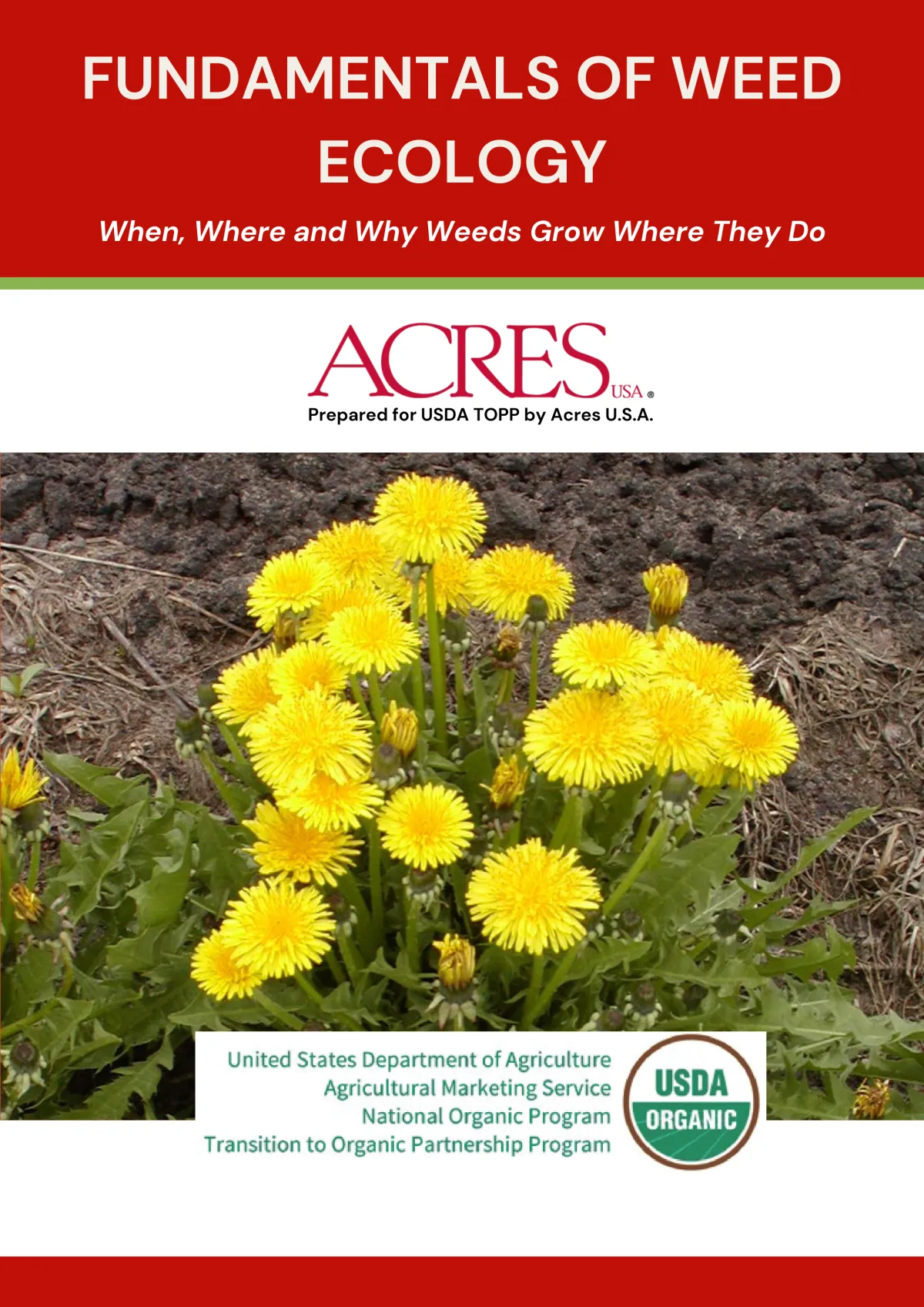
What is in this Free White Paper?
Every year, U.S. farmers spend billions trying to control weeds, yet weeds persist. Why? Because weeds are not random—they follow predictable ecological patterns. This free whitepaper explores the science of weed ecology and shows how understanding plant succession, life cycles, and soil disturbance can transform your approach to weed management
Why Weed Control Keeps Failing
Farmers are told weeds must be eliminated—but despite herbicides, cultivation, and new technologies, weeds return stronger each season.
U.S. farmers spend $6.6 billion annually on herbicides
Weed seed banks can persist for over 140 years
No single tool—chemical or mechanical—provides permanent control
The problem isn’t effort.
The problem is misunderstanding.
Weeds Follow Ecology—Not Marketing Claims
Weeds grow in response to disturbance, bare soil, and plant succession. When you understand why weeds appear, you can manage them intelligently—often with fewer inputs and better soil outcomes.
This whitepaper explains:
What weeds actually are, from an ecological perspective
How succession determines which weeds show up—and when
Why annual cropping systems favor annual weeds
Why no-till systems often struggle with creeping perennials
What You'll Learn
✔ The difference between annual, winter annual, biennial, and perennial weeds
✔ How the weed seed bank works—and why tillage timing matters
✔ When cultivation helps—and when it makes problems worse
✔ Why some “weeds” function as free cover crops
✔ Practical organic weed management strategies that build soil health
✔ How to align crop rotations, cover crops, and disturbance with ecology—not against it


Trusted by Leaders in Regenerative Agriculture:
Prepared by Acres U.S.A. for USDA TOPP, this white paper is supported through the USDA Organic Transition Initiative and offers cutting-edge knowledge backed by real-world experience.
🔗 Learn more and apply:
TOPP Overview
TOPP Mentor Application
TOPP Mentee Application

© Copyright 2025, Acres U.S.A.® Acres U.S.A.® is a registered trademark of Acres U.S.A.®, LLC. Reproduction of material in this issue in any form without permission of the publisher is prohibited. No permission required for photocopies made for personal use. Requests for permission to reprint must be in writing to PO Box 351, Viroqua, WI 54665; email [email protected].
© 2025 Acres U.S.A.® LLC - All Rights Reserved
Acres U.S.A. is North America’s oldest publisher on production-scale organic and regenerative farming. For more than 50 years, our mission has been to help farmers, ranchers and market gardeners grow food profitably, regeneratively, and with nature in mind.
support@acresusa.com
970-392-4464